
'The chief minister believes the poorest of the poor have the first right on government resources.'

Competition from Nepalese teas -- which has duty free access to the Indian market -- has emerged as a lower-cost alternative to Darjeeling tea, challenging its viability.

For the first time, the Data Security Council of India assembled a joint task force to source threat intelligence at the origin and ensure coordinated action across the cybersecurity spectrum.
There remains a debate on who said this: "When the facts change, I change my mind. What do you do, Sir?" Was it the British economist John Maynard Keynes or the American economist Paul Samuelson. Irrespective of who said it, this sentiment appears to have found resonance in ITC's boardroom in recent years.
The Supreme Court on Friday declared JSW Steel Limited's resolution plan for Bhushan Power & Steel Limited (BPSL) "illegal" and ordered the latter's liquidation, four years after the company was acquired by JSW Steel under the Insolvency and Bankruptcy Code (IBC). Following the ruling, JSW Steel shares fell sharply.

The inclusion of a "no-contest" clause in Ratan Tata's will has caught the attention of India Inc, prompting a wave of interest among promoters of listed companies and business families. Legal advisors and estate planners are seeing a noticeable uptick in queries, as wealthy individuals look for ways to shield their legacies from courtroom battles.

Alongside the power plant, Chief Minister Banerjee also laid the foundation stone for JSW Industrial Park, which will be spread over 2,000 acres with plug-and-play infrastructure.

As India's tea exports reach their highest in years, a sharp rise in imports is raising concerns among producers. In 2024, India took the third spot in tea exports, pipping Sri Lanka after exporting 254.67 million kg (mkg) of tea, up from 231.69 mkg in 2023.
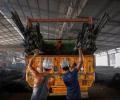
The "weaponisation" of economic activity - through tariffs and sanctions - is now a reality, with countries leveraging these tools strategically, External Affairs Minister S Jaishankar said at the Raisina Dialogue recently.
JSW Steel, owned by Sajjan Jindal, has emerged as the world's most valuable steelmaker, boasting a market capitalisation (mcap) of nearly $30.31 billion, according to Bloomberg data.
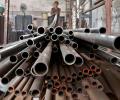
Domestic steel prices have seen an increase over the past couple of months in anticipation of a safeguard duty, but a looming global trade war is likely to weigh as threat of import rises and prospect of export flounders. Data from BigMint showed that in March 2025, hot rolled coil (HRC) prices ex-Mumbai increased by Rs 600 per tonne month-on-month (M-o-M), rising from Rs 48,400 per tonne in February to Rs 49,000 per tonne.

Shares of Tata Consultancy Services (TCS), the country's largest IT services provider, continue to remain under pressure, hitting a new eight-month low of Rs 3,624.90 intraday on Tuesday before closing at Rs 3,631, down 1.19 per cent. In the past two trading sessions, the stock price has declined 4 per cent on fears of a slowing US economy.

The TMC-led West Bengal government has already started laying the groundwork for the election, setting the tone with the recent Bengal Global Business Summit and the state Budget.

The average Indian works 46.7 hours per week, surpassing even China's 46.1 hours. In some sectors, the numbers are even more staggering.
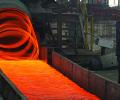
'The steel industry expects the government to decide on safeguard measures from dumping post-Budget'

'This is the Bengal story, where businesses are nurtured, dreams are realised, and legacies are built.'
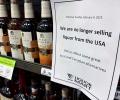
'We have to be prepared for the larger disruption that is likely to take place.'

PVR Inox shares hit a 44-month low of Rs 1,154, declining 8 per cent on the BSE in Tuesday's intra-day trade in an otherwise firm market, driven by growth concerns. The stock has slipped 23 per cent from its December high of Rs 1,620, touched on December 5, 2024. It has fallen below its previous low of Rs 1,203.7 from June 4, 2024, and is trading at its lowest level since May 2021.

Share prices of Nestle India, Asian Paints, Bandhan Bank, Tata Technologies, AU Small Finance Bank and Avenue Supermarts, all a part of the BSE 500 index, have hit their respective 52-week lows on the BSE in Thursday's intra-day trade after a sharp correction in the equity markets.

'Spending by the middle class is limited with a focus on savings. However, there is buoyancy at the top-end.'
 © 2026 Rediff.com - Advertise with us - Disclaimer - Privacy Policy - Sitemap - Feedback - About us - Terms of use - Grievances